
The joy of potatoes?
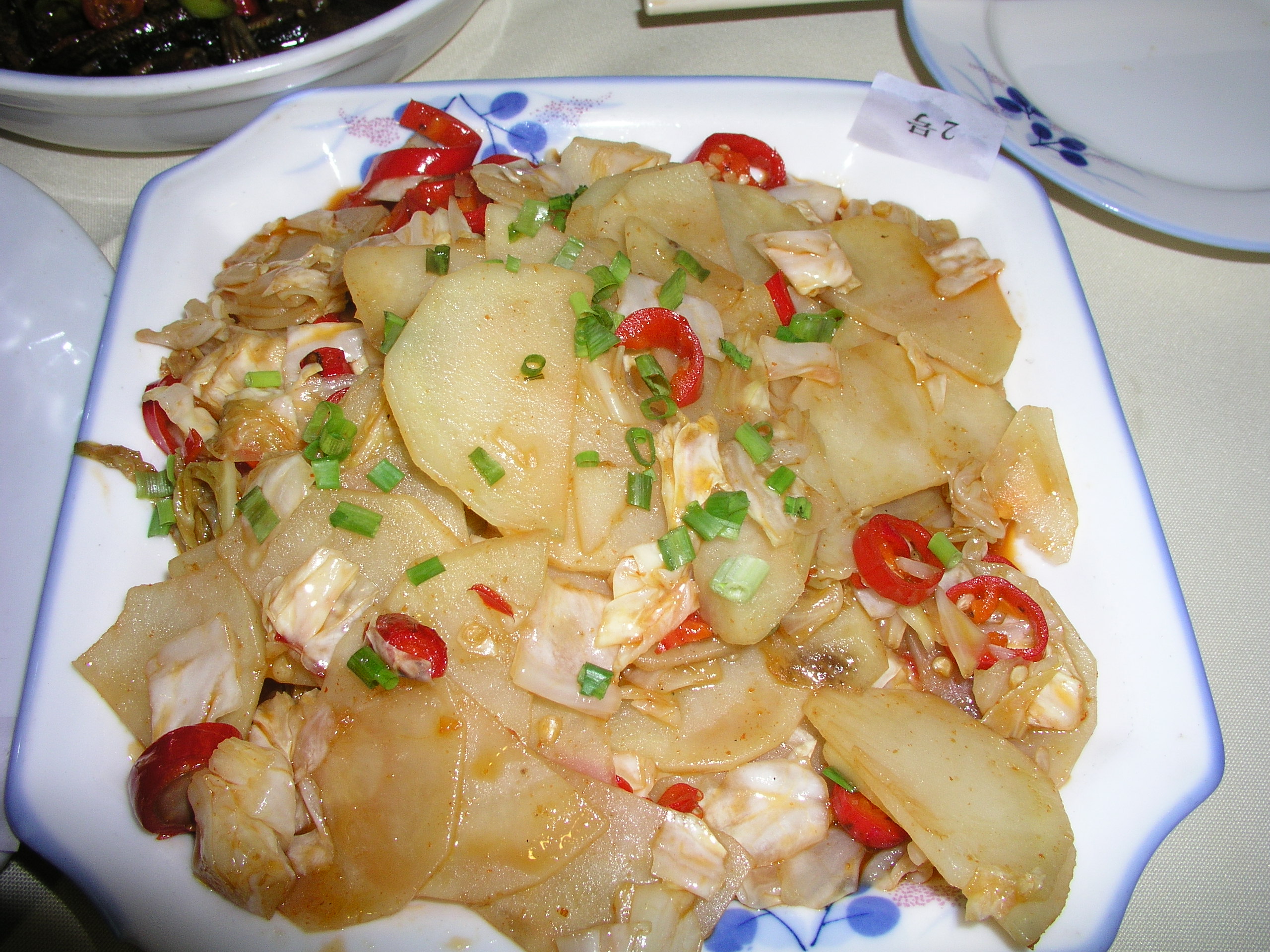
Sliced potatoes with pickled greens - to be eaten with rice
According to this piece by Lauren Keane in the Washington Post, the Chinese government is hoping that the potato will help to provide greater food security as the country’s population peaks. Earlier this year, the article says, the government signed an agreement with the International Potato Center to jointly launch a potato research centre in Beijing.
Of course, persuading the Chinese to eat more potatoes will not be easy. Most Chinese people I’ve talked to about the importance of potatoes in, for example, the British diet, are incredulous – you mean, English people are willing to eat potatoes as 主食, a staple starch food?!!!*&@%^&*!!
Years ago, when I cooked a roast beef supper for some Sichuanese friends, with roast potatoes and vegetables, they ate the food – and then demanded some rice. As far as they were concerned, it was OK to have some potato as a èœ, a dish, but not as a substitute for a normal staple food based on rice or wheat. Only desperate peasants would be content to do without rice. Generally, in Sichuan, people ate a few potatoes here and there, usually either stir-fried with vinegar (醋熘土豆ä¸ï¼‰or a little chilli and Sichuan pepper(ç‚土豆ä¸), or as a side ingredient (é…æ–™) in a stew.
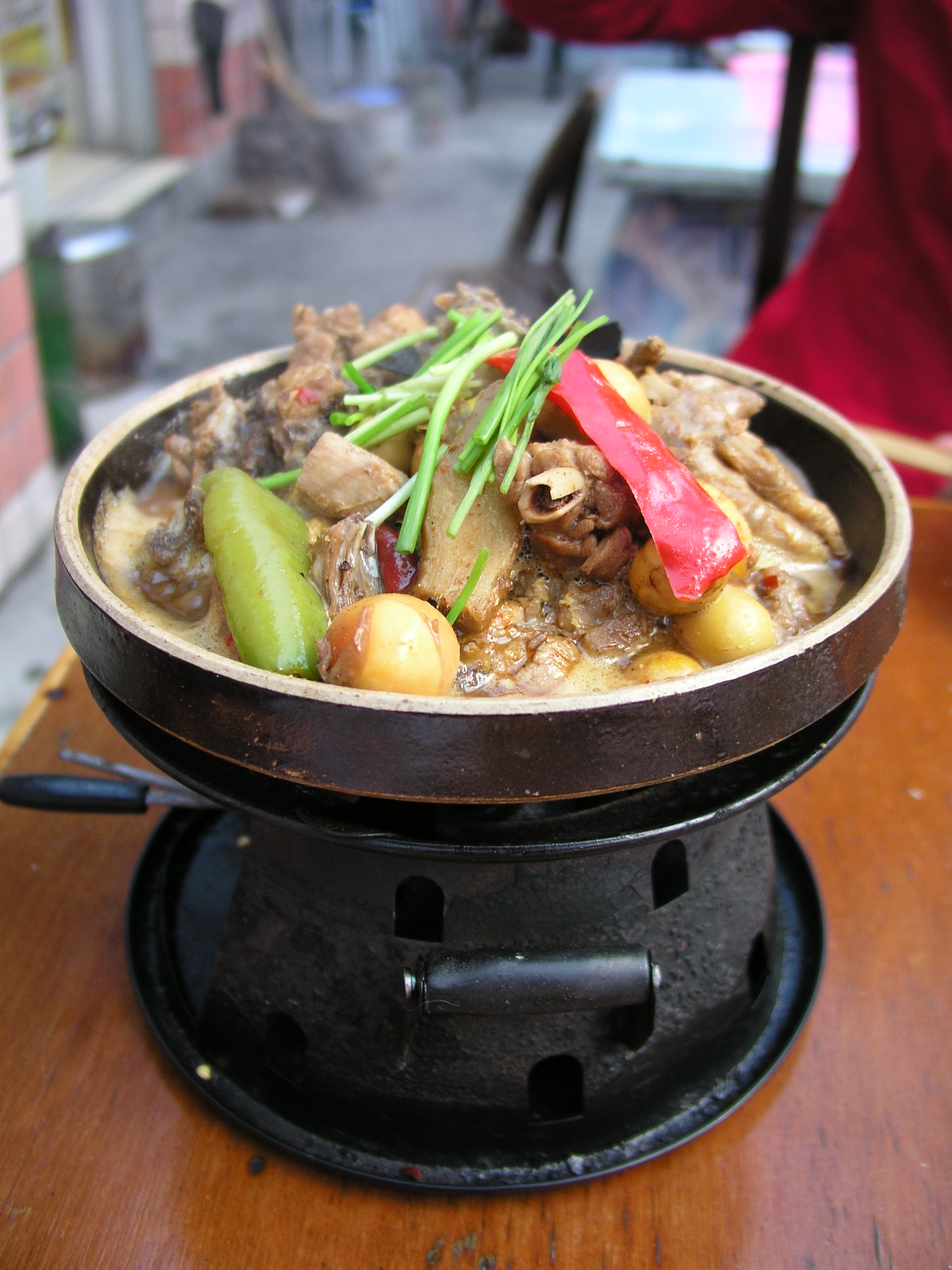
Potatoes as a secondary ingredient
Most people in China still seem to regard potatoes as as a poor peasant food or a famine staple, along with maize and sweet potatoes. It was the arrival of these New World crops in China from the late Ming Dynasty that enabled the cultivation of marginal and mountainous lands unsuitable for rice and wheat, and allowed the exponential growth of the population over the Ming and Qing. But it was only people living in these marginal areas who would consider these starchy foods as potential staples, because they had to – anyone who could afford the choice would eat rice, or wheat in the north. This, no doubt, is why people could never understand why someone like my father, living in a rich country like the UK, would adore potatoes and find the idea of doing without them for a few weeks in China profoundly unsatisfying.
Chinese friends of mine remember being forced to subsist on sweet potatoes during times of extreme hardship in the 1960s and 1970s. Now, in better times, you’re most likely to see potatoes as one of a few simple vegetable dishes at a home-cooked supper, or as a nostalgic poverty food in a ‘rustic’ restaurant. When I lived in Hunan, ‘rustic’ restaurants would sometimes make é”…å·´é¥ pot-sticker rice with potatoes or sweet potatoes – a reference to the hard times of the past when people would try to make the rice go further by adding other ingredients.
But as McDonalds and KFC seduce the younger generation in China into eating burgers and fries, will perceptions of potatoes change? The Chinese government is clearly hoping that they will, as the land dries up or is covered in concrete, and as the number of mouths to feed approaches its likely peak of 1.5 billion.
Do any Chinese blog readers notice a generational difference in attitudes towards potatoes?
5 Responses to “The joy of potatoes?”
It is interesting to see how the South American origins of the potato have faded over the years – to the extent that the Irish suffered owing to a blight and that it is a primary starch supplement in Western meals. And how the myriad of potato varieties prized in a country like Peru would likely be viewed w/ disdain in China.
Sort of how the (again) South American originated tomato wasn’t widely consumed until the turn of the century (fears about nightshades and all), but now is usually associated w/ the Mediterranean (especially Italy).
I’m am Chinese living in New Zealand and I haven’t seen any negative attitude here with Chinese and potatoes. Like your father’s beloved British potato, New Zealanders also adore their potatoes. I think you are right with the younger generation eating plenty of fries, they will probably start to see potatoes as “cool” as their palates become more accustomed to western food. Saying that, taking rice away from a Chinese meal would be a huge deal!
My parents would also cook potatoes into their dishes and serve rice as well. One that springs to mind is a chicken, carrot and potato curry served on rice. I guess it’s common for Chinese to use new ingredients as an addition to a dish rather than a substitute for anything.
No potato stigma here in Singapore. But always with rice, not as a replacement for rice.
I agree with Genie. We (Chinese in S.Cal) here are okay with substituting potato as their main start component, but only if we are having a westernized meal. whether to older or the second generation still prefer to have rice or noodles if the meal format is chinese. It is hard to eat mashed potatoes with ma-po-tofu or garlic eggplant. Even to me, it just doesn’t sound right.
maybe the primary starch to chinese people has to be plain (unseasoned) and be able to be picked up with chopsticks (?)
Sounds like the Chinese government needs to sign up a Parmentier character!