
Sichuan chilli bean paste

Posted by Fuchsia on January 25, 2010
Ingredients

I spent yesterday experimenting in my kitchen with Zhang Xiaozhong, the head chef of Barshu restaurant, where I work as consultant. A few people have emailed me to ask which Chinese seasonings to use, and so while Chef Zhang was here, I asked him to give me his opinion of a few versions of chilli and broad bean paste (豆瓣酱), which is one of the essential flavourings of the Sichuanese kitchen. When I first started writing about Sichuanese food, the only brand available in the West seemed to be Lee Kum Kee’s chilli bean sauce (toban djan), but a few others are now on sale in Chinatown in London. These are the ones we tasted, with some of Chef Zhang’s comments:
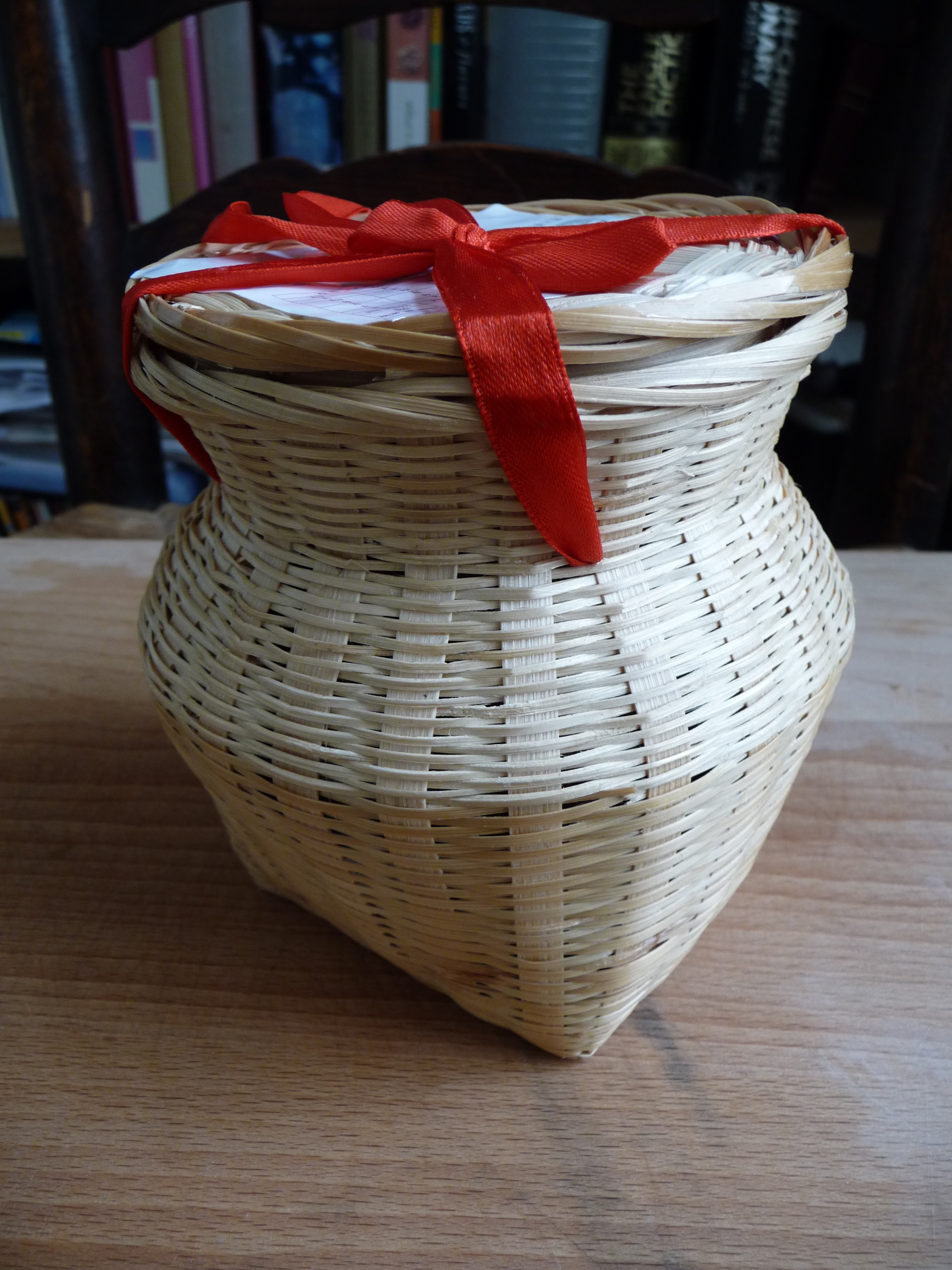
Sichuan Dan Dan Seasoning Co

Sichuan Dan Dan Seasoning Co

Sichuan Dan Dan Seasoning Co Ltd: This was the best of the bunch, with a good colour and taste, and no extraneous ingredients. It simply  contains chillies, broad (fava) beans, salt and wheatflour, as it should. This one is close to those people use in Sichuan, although it’s by no means a top-level product (Serious chefs in Sichuan, however, often commission artisanal products from small workshops, because they don’t trust those produced by factory operations.)
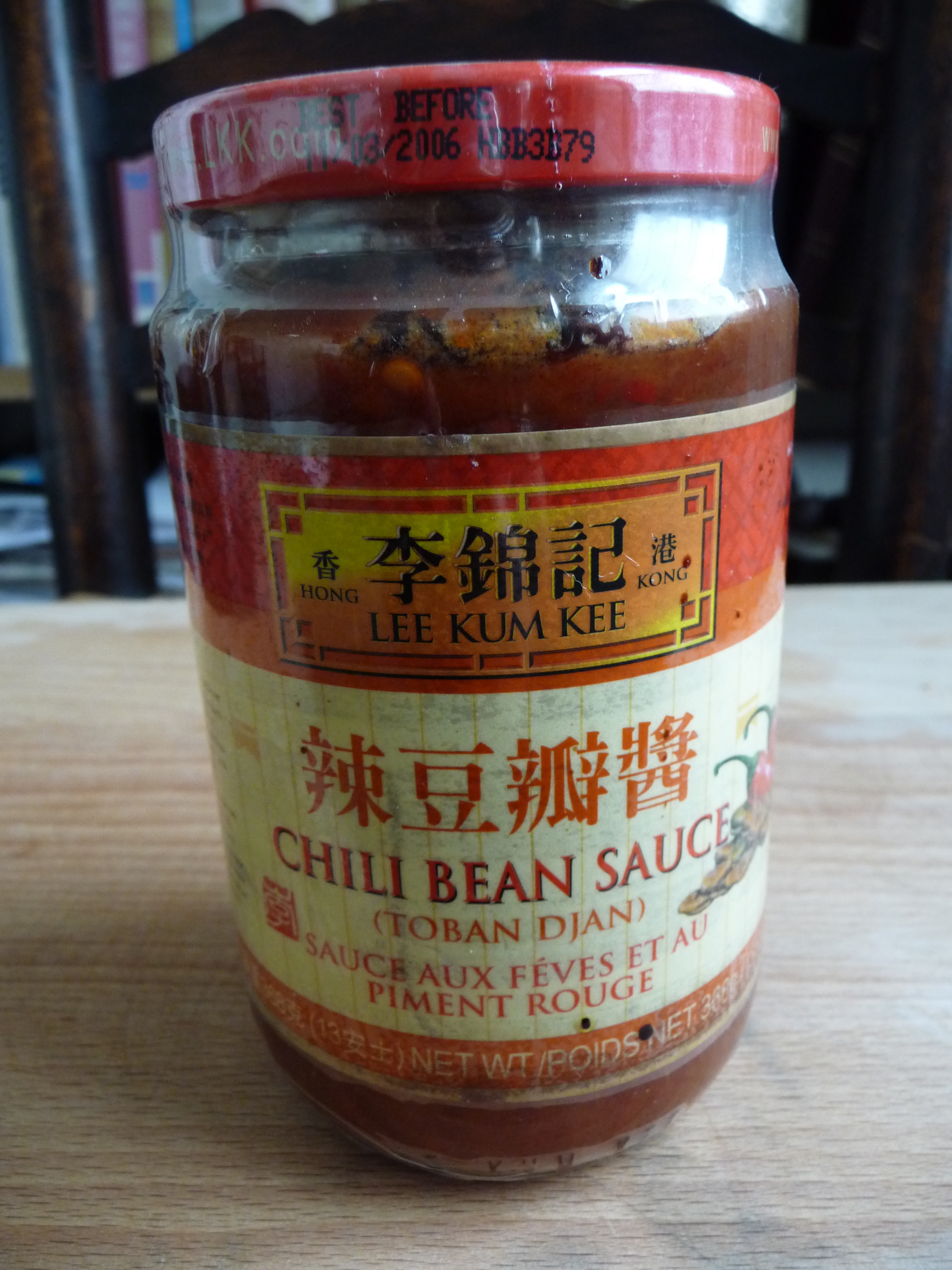
Lee Kum Kee

Lee Kum Kee

Lee Kum Kee Chili Bean Sauce (toban djan): Chef Zhang points out that this is made by a Cantonese rather than a Sichuanese company, and contains various non-traditional additives, such as sugar, garlic, modified cornstarch, lactic acid and two flavour enhancers. (It’s hard to understand why additives are required in a product that traditionally keeps well and is intensely flavoured…) He didn’t feel this was really suitable for creating an authentic Sichuanese ‘homestyle flavour’ (家常味型), because the colour and the flavour were wrong. (Sichuanese chilli bean pastes, once matured, have a deep, almost-purplish red colour.)
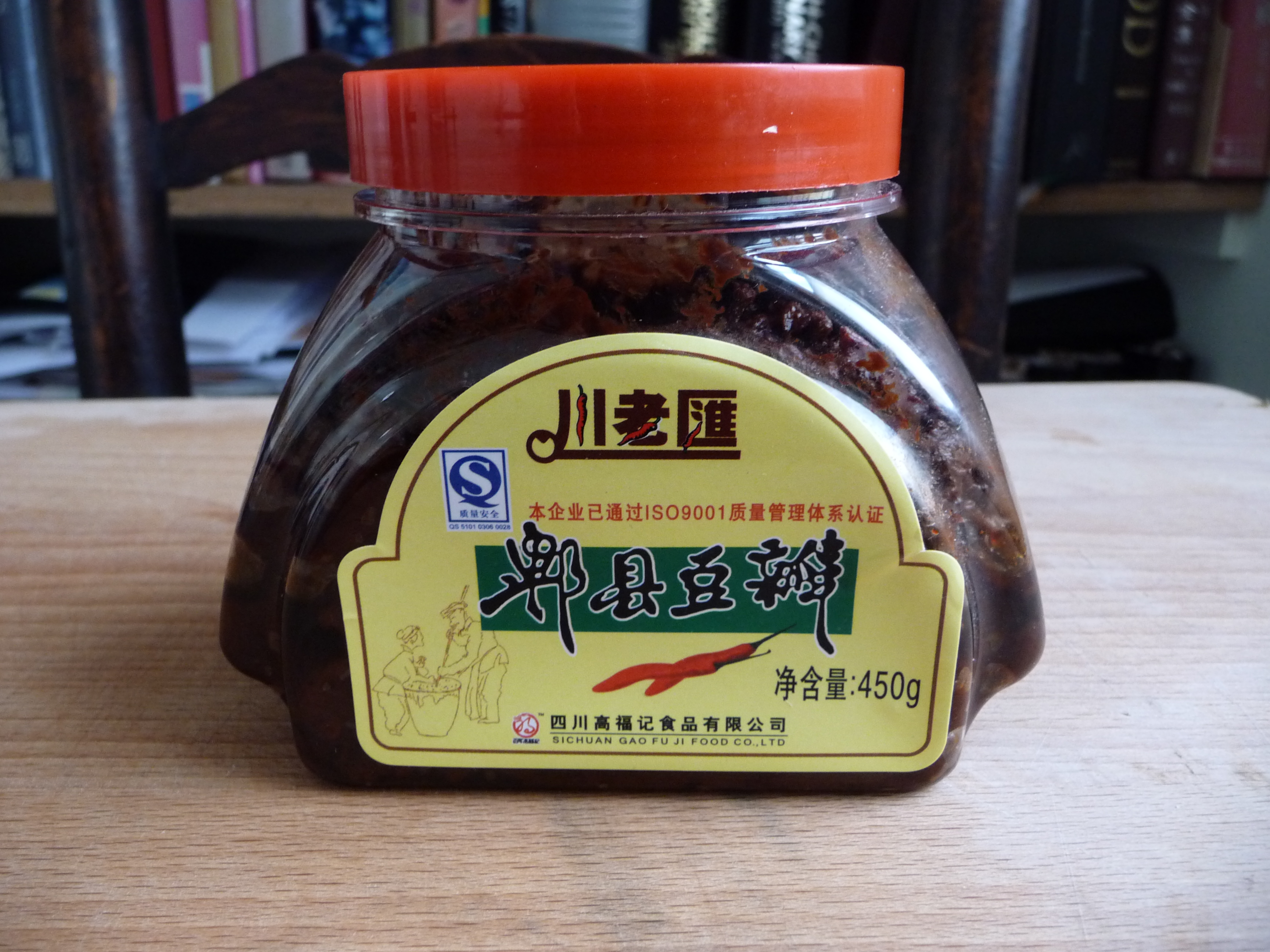
Chuan Lao Hui

Chuan Lao Hui Pixian Douban (川老汇郫县豆瓣):He thought this one was ‘ordinary, OK (一般)’. He preferred the ‘red oil chilli bean sauce’ (红油豆瓣)produced by the same company, although he wasn’t wildly enthusiastic about that either. (The ‘red oil’ version does, however, contain various extra ingredients, including sugar, MSG and spices, while the regular version contains only chillies, broad (fava) beans, salt and wheatflour. Non-Chinese speakers will be able to recognise it because the pot is the same distinctive shape, but the sauce itself is a lighter red, and oily). The regular Pixian paste is also available in plastic packages (picture below).
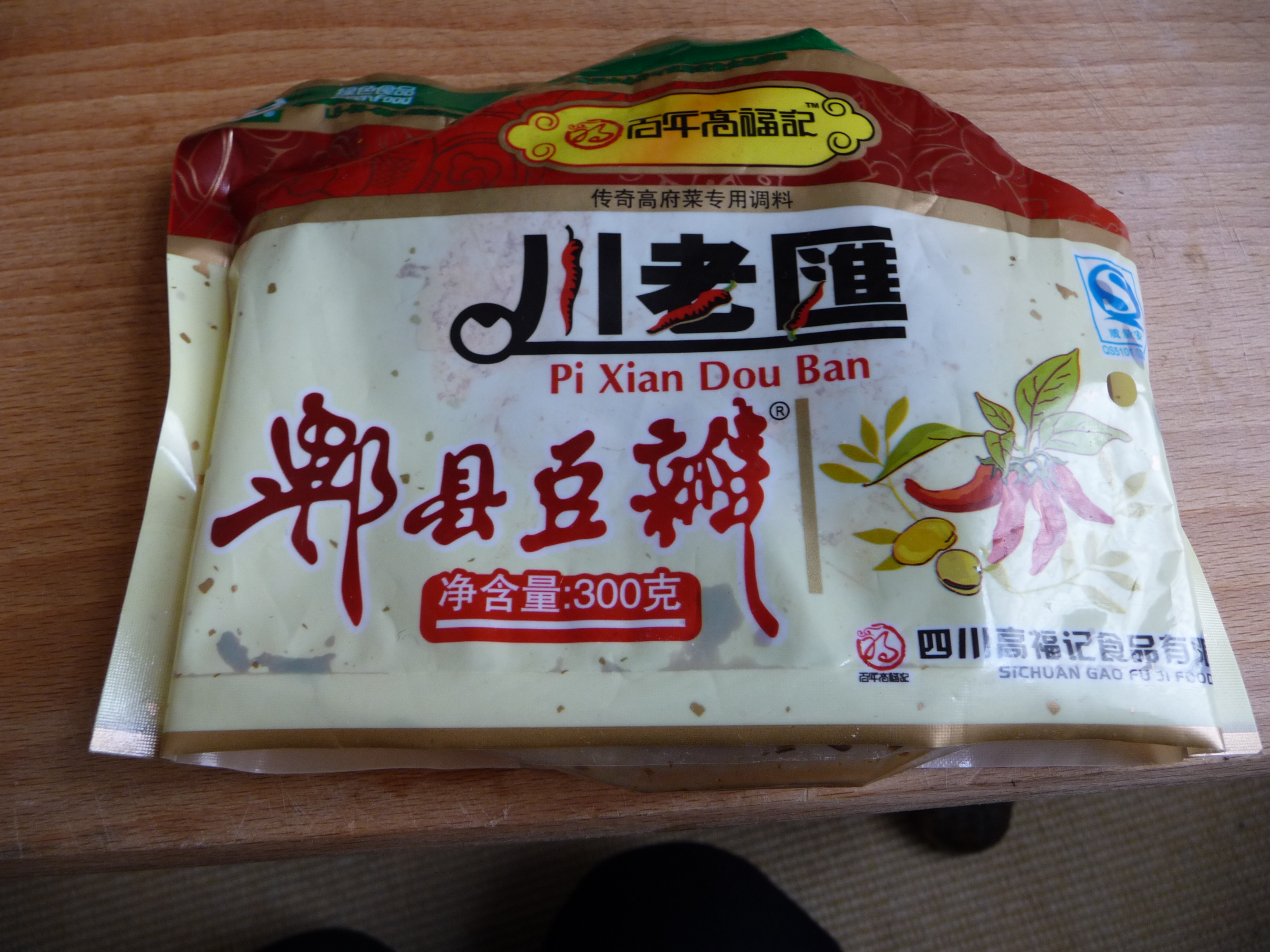
Lao Chuan Hui

Chuan Lao Hui 2

Hope this is helpful.


Tags: ,

38 Comments to Sichuan chilli bean paste

Liuzhou Laowai
25 January 2010

Never mind in the west! Lee Kum Kee Chili Bean Sauce is about the only one I can find in Guangxi, China

Michael Zehrer
25 January 2010

But where can I get “Sichuan Dan Dan Seasoning Co Ltd” in Europe?

Fuchsia
25 January 2010

Liuzhou Laowai – what shocking news! Lee Kum Kee have obviously been tremendously successful in marketing their products in Mainland China. When I was first learning to cook in Sichuan, I never came across the brand. A few years later, Lee Kum Kee sauces of various kinds were popping up in many kitchens, high and low.

Michael, I’m afraid I’ve no idea! But I suspect better Chinese supermarkets might stock their products. More and more regional, non-Cantonese seasonings are being sold in London, because of the growth of travel, study and immigration by people from across the mainland…

mel
25 January 2010

I have not seen the sichuan Dan Dan product in New York or New Jersey. The lee Kum lee product is i believe readily available and the Chuan lao Hui in its distinctive shape bottle can be found in Chinese Supermarkets.
I prefer a product called Pixian Seasoned Bean (also called Pixian Thick Broad-Bean) which is available in New York in a soft plastic container from Chengdu Xin Hong Wang Company (is this a well known company in sichuan?) ; the listed ingredients are in order Chili, broad beans, salt, wheat flower and potassium sorbate. There is also another product ,which i haven’t used yet, available in a clear plastic with the identical ingredients but aside from the words Super Lucky, everything else is in Chinese, so i can’t make out the manufacturer. I’ve used the Pixian Seasoned Bean very successfully ( i think ) in Fuchsia’s recipes.

Lizzie
25 January 2010

It’s a shame the Lee Kum Kee is the most readily available. Last time I bought it I thought it had too many chilli skins in there.

Zoe
26 January 2010

The best one I’ve found here in Canberra (Australia) is <a href=”http://www.progressivedinnerparty.net/2009/07/06/indulgence/comment-page-1/#comment-2119″this one which gives ingredients as “broad bean, chilli, flour, salt” and has JuanningDouban” on the label.

Lee Kum Kee is the Coca Cola of Chinese sauces ;)

Stuart Fellows
26 January 2010

I think I’ve got another one from Gao Fu Ji Food: it’s in the same-shaped plastic jar but says “Hong You Dou Ban”, ingredients “broad bean, chilli, flour, salt, oil”. I like it a lot: whole half beans and lots of chilli. Is this something different? I’m becoming a little confused…

Michael
26 January 2010

Ah, that’s very useful – will have to keep an eye out for the Dan Dan sauce next time I am shopping in China Town

Fuchsia
26 January 2010

Stuart – the ingredients sound promising. And some of the coarser pastes are sold with whole half beans and very large pieces of chilli in them. When I was learning to cook in Sichuan most pastes came like this, and we had to chop them to a puree with our cleavers, on a wooden board, before we used them. (If you are chopping a reasonable quantity, you could do this in a food processor.) Nowadays, most pastes are sold in a finer version so you can use them straight from the jar – I presume they ferment them whole, and then process them to a paste before packaging.

kattebelletje
26 January 2010

I’ve been on the Pixian chilli broad bean paste hunt for years and always kept an eye on the stores to see what they stock. Here are the varieties of Pixian chilli and broad bean paste I came across in the past years, and here is a website comparing brands [google translate]. As of late, it seems the real stuff from Pixian is disappearing again from the stores.

Vladimir
26 January 2010

Fuchsia Hello, I live in Minsk (Belarus), today finished reading your book on the Russian edition, it’s great! Thank you for your work! I work as a cook and I am very interested in Asian cuisine, but so far only theoretically. I also love to hitch-hike and hope to make their great culinary journey.
I hope to visit China and to take your book as a guide))
Thank you for the inspiration!!!

Vladimir, 23 years
Belarus

Aaron
30 January 2010

Hi Vladimir – I’m an American who spends a lot of time in Shanghai and I’m also a big fan of Fuschia’s books. I’m going to be in Minsk in March. Perhaps I could bring you some Pixian Chili Bean Paste from China in exchange for helping me to find a good place to eat in Minsk?

Fuchsia
31 January 2010

Hi Vladimir, it’s lovely to hear from you, and I can hardly believe that my book is being read in Belarus, in Russian! So thanks for your message. And I am v amused by the idea that this blog might become a place for people to exchange tips on hot restaurants in Minsk!
Fuchsia

Tom
31 January 2010

Hello Fuchsia, thanks very much for the tips. I use Toban Jhan chilli bean paste by Amoy. It has 44% chilli, 6% fermented salted soy beans, and salt, water, soy sauce, suger, flavouring and “flavour enhancer E621″. Not perhaps enough beans (and not broad beans), but this is sometimes available in supermarkets in the UK.

Could you do something similar for Sichuanese dried chillies? The Cool Chile Company you name in your great book “Sichuan Cookery” no longer sells them. I only have occasionally found them in one of the Chinese supermarkets on Gerrard Street in London.

Mart
31 January 2010

Hi Fuchsia, great infromation thank you. ALways wonder what production standards for food stuff are in China. Would it be possible to make the ‘basic’ sauces (also hoisin etc. ) yourself and up the quality? Bit of a shame nobody sells good stuff via the internet.

Stuart Fellows
1 February 2010

You can get sichuan chillies (and facing heaven chillies) from the Spice Shop (just off Portobello Road)

Thomas K.
1 February 2010

Went into the local Asia shop today to buy some fresh tofu and chilis and BANG there was Sichuan chili bean paste on the shelf. Of course I did not dream of being able to purchase this stuff so easily in my little midGerman town, but alas I was lucky.

The stuff comes from V.R. China (the real thing), imported by “Tainkimheng Germany” (they do have a website). Apparently if judged from the label in greater quantities produced factory product. Ingredients: vegetable oil, wheat flour paste, beans (not specified), chili, salt, unfortunately benzoate and sorbate (from the wheat paste) plus MSG. Very oily, deep brownish red, texture fine, not coarse. Smells good, tastes good (although I can`t compare with the other Sichuanese bean pastes). Can`t translate the (chinese) Kanji though.

In the first place I went to the shop to buy korean chili flakes to make korean chili paste (gochujang). (I cannot convince my wife to eat the regular korean chili paste which she finds too stinky). This generated the idea to ask: … … Fuchsia, (or somebody else), you would not be able to accidentally coax the recipe to make a basic sichuan chili bean paste at home out of a friend who commissions this stuff? Or look it up in a chinese sichuan cooking book? Of course, only for the real aficionados?? (I would be willing to trade in the korean recipe, but since it is pretty much public, this is not sooo good a bargain).

Willa
1 February 2010

I found jars of Sichuan Dan Dan Seasoning Co douban jiang by happy accident a few weeks ago. I was trying to find something more pungent and true to the taste of douban jiang than what I could get out of the LKK version. I have to say it is much better (though of course, not quite like what you can source in China).

It’s available at See Woo Hing Supermarket on Lisle Street in London Chinatown. It’s the supermarket that has the green & gold theme. I didn’t find it in the sauces aisle, but rather on the shelves above the freezer items next to some vinegars and cooking alcohol. Just keep an eye out for the wicker basket.

Also, there is no jar inside the wicker basket! The sauce comes in a plastic bag and you have to find your own jar for storage.

Aaron
2 February 2010

This past fall I took a cooking course at a Chinese trade school in Shanghai. I noticed that the chef would spend about several minutes chopping the paste before using it (someone mentioned this above) and he also warned that it’s easy to end up with an over-salty dish when using it.

He recommended that you limit or eliminate other salt in the dish, and add a bit of sugar to counter the saltiness. We were also told that as a general rule, the cheaper brands of chili bean paste are saltier.

I’ve come to think of genuine Pixian chili bean paste as the secret ingredient for fantastic Sichuan food, but at the same time I’ve found that it can make a dish way too salty if you’re not careful.

Stuart Fellows
11 February 2010

Oh, and by the way, the chilli seeds germinate nicely and grow into bearing plants

Daniel Möller
11 February 2010

For my humble Sichuan cooking experiments I used 3 different brands of douban jiang until now. The first one was the hot bean sauce by Yeo’s (a company from Malaysia). The second one was Lee Kum Kee product mentioned above. The third, last and best one was an native sichuanese douban jiang from Pixian. I read once, this city is well known for the best douban jiang. Unfortunatly this one was only available for a short time in the asian grocery of my choice. It was indeed darker than the Lee Kum Kee product and had a stronger flavour. Astonishingly the Yeo’s product was much closer to the original in colour and flavour, although it is made of soy beans instead of fava beans. Meanwhile I saw one or two other brands in the asian grocery, but I didn’t test them.
For my red-braised beef from your “Land Of Plenty” last weekend I used the douban jiang by LKK. By the the way: One of the best – if not the best – chinese cooking books I own. The best sichuanese one anyway. Thank you!

regards
Daniel

Brian
15 February 2010

We’ve really enjoyed a chili sauce from a company called Laoganma. The only english product identifier seems to be “oil chili” but the label features a photo of a stern looking chef in a white apron. Among the ingredients are MSG and Sodium Dioxide which we aren’t thrilled with. It also contains Szechuan peppercorns but no fava beans. I love the flavor, though. I can almost eat it out of the jar…

I have been substituting this sauce for Szechuan chili paste in the recipes – am I changing the flavors a lot by doing so?

Is it possible to make one’s own chili paste? We have ready access to Chinese and Korean dried chilis. Have you run across any recipes that you could share?

I’ll echo the common sentiment here that your books are incredible resources. Thank you very much for sharing your knowledge!

Brian

Bruce Marlin
15 February 2010

Thanks for your informative post. I’m endlessly browsing the aisles of bottled sauces and condiments of the Chinese markets here in San Francisco, and it’s very rare to find a good brand of hot bean sauce.

I’m also interested in making my own, but I haven’t been able to find a recipe. I’d be grateful if you have any information you could share.

Bruce

mel
16 February 2010

Bruce, Brian-the cookbook Classic Chinese Cookbook-by Yan Kit So ( included in the bibliography of Fuchsia’s Landy of plenty), describes a home preparation of Sichuan Chili Paste-grind “sufficient” chili peppers in a food processor or mortar and pestle and mix with yellow bean sauce (assume one with broad beans). She mentions a starting proportion of 1 tablespoon chili to two tablespoons bean sauce (mild version). Hope this helps or begins discussion.

Fuchsia
16 February 2010

Just wanted to say that I acknowledge all the requests for information about how to make chilli bean paste at home. I will post about it at some point – I have documented a few methods in Sichuan, but they are buried in notebooks and I just haven’t had time to dig them out! But watch this space…

Graham Booth
17 February 2010

Excellent post on chilli bean paste, which I am now slightly unhealthily obsessed by thanks to your book!

I can confirm that the Sichuan Dan Dan Seasoning Co and its attractive basket have made it to Manchester and now into my cupboard (I actually thought it was the Pixian brand, just in a special package).

Incidentally, whilst in Chengdu last year I tried to arrange a visit to the Pixian douban factory, in a sort of weird pilgrimage. As I can’t speak Chinese, I asked the receptionist at my hostel if she could call the factory for me and ask (after a few weeks of miming your way around China you tend to lose your embarrassment about making such ridiculous requests of people!). Sadly it seems the factory doesn’t accept visitors…but I would have kicked myself if I hadn’t at least tried. Did you actually go there one time Fuschia, or am I imagining that?

More successfully, I did visit the “Cookery Museum” outside of Chengdu which features a restaurant where you can order dishes and watch them cooked in the kitchen from behind a glass screen. Having learned what little I know about Sichuan cookery by experimenting in my flat with a teflon wok and various items retrieved from Chinatown, I found this absolutely fascinating and would highly recommended it (despite the trek to get there). I also got to try my first rice crust…it was just a shame I couldn’t eat (and therefore see) more!

It also occurs to me now that they had a very large special “menu” of many Sichuanese dishes with their names in both Chinese and English, which I begged to be able to photocopy. I think it might be the standardised menu that got circulated around the time of the olympics. Has anyone seen an online version?

Graham.

mel
17 February 2010

Graham- we will be in Chengdu in March for a two week cooking program at the Sichuan Institute for High Cuisine; would be interested in a side trip to the “cookery” museum , can you provide any details on location, etc? Is there any reference on internet?

Fuchsia
17 February 2010

Hi Graham
Yes, I did visit the Pixian doubanjiang factory many years ago! I think I was very lucky to be allowed in – as far as I can remember, the initial answer was no, but eventually they relented. I wrote about the place in my Sichuan cookery book, I think in the introduction to the recipe for fish braised in chilli bean sauce.

I don’t think the Sichuan food museum would be using the Beijing Olympics menu – I had a copy of that and don’t think it was that strong on Sichuanese and other regional dishes.

Graham Booth
18 February 2010

Hi Fuchsia,

Good to hear you actually did visit the factory and I didn’t dream it (whilst doubanjiang is definitely something of an obsession, I’d prefer to keep it a conscious one)! Now I know where the section is in the book I’ll look it up again. And I’m very much looking forward to your home-made artisanal chilli broad bean paste recipe…

As for the translated menu, I’ll scan and put up online when I get time, then post here about it. It may be of value to other non-Chinese speakers visiting Sichuan. I only acquired it pretty late in my trip, sadly.

I have to say that I found not knowing the language could lead to quite disappointing restaurant experiences, especially in more formal places, (a good reason to learn Chinese if ever their was one!).

Of course I got a fair amount of mileage from the random “point and pick” method! On the whole I had far more success with street-side or small-restaurant eating, where you could often see the produce and choose something you hadn’t tried before. The food seemed far more like home cooking, but that was generally no bad thing.

I would definitely advise any prospective traveler to arm themselves with as many menus featuring Chinese characters as possible (including the sections of your books covering cooking styles and flavour combinations, which were very helpful!). One question though – is there a practical reason that the pinyin translations in your books don’t include tonal markings? I always wondered why…

Graham.

Fuchsia
18 February 2010

I agree that it’s difficult to order well in Chinese restaurants without knowing the language – that was what spurred me on in my studies in Chengdu! I used to beg restaurants to let me photocopy their menus, and then sit in a teahouse with a dictionary and learn the characters.

Graham – someone else asked me recently why I hadn’t included tonal markings in my books.I suppose it’s mainly because they look messy, and are only helpful to a very small proportion of people who know a little Chinese but can’t read characters. If you can’t speak Chinese at all, it’s quite hard to pronounce the pinyin in a way that is comprehensible to someone Chinese, with or without the tonal marks. And if you are beyond a certain level with Chinese, chances are you’ll be able to read the characters anyway. But I do recognise that it’s annoying for people who are starting to learn!

I suppose if I’d intended the Sichuan book to be used as a guidebook, I’d have thought more about it, but when I wrote it I had no idea that people would start showing up with it in Chengdu and using it to sniff out dishes in local restaurants! I’m sorry if you find it frustrating, anyway.

mel
19 February 2010

Fuchsia-the conversation here refers to “The” Pixian Chili Paste Factory -is there only one in the Pixian area? The labels on products i’ve seen give different manufacturers but perhaps they are all subs of one.

Graham Booth
20 February 2010

Mel,

I forget where I first heard about the museum, but I managed to dig some details off the net:

Museum of Sichuan Cuisine
成都川菜博物馆
Including Museum of Sichuan Cuisine Interactive Demonstration Hall 成都川菜博物馆
Pixian Guchengzhen
郫县古城镇成都川菜博物馆
(028) 87919398

“One of the first privately owned museums in China, the Museum of Sichuan Cuisine was founded in 2007 to pay elegant homage to the history of Sichuan food. It holds a private collection of local cooking equipment and tableware that spans 2,000 years. Besides the exhibition galleries, the beautiful and expansive museum campus also features a tea house, a temple to the Kitchen God, several grand banquet rooms and a state-of-the-art demonstration kitchen. In an exclusive arrangement with Lotus Culinary Travel, the museum’s Cuisine Masters will lead guests in preparing classic Sichuan dishes.”

Here are some panoramic view of the museum…

http://www.360cities.net/image/chengdu-chuancaibowuguan-1-1
http://www.360cities.net/image/chengdu-chuancaibowuguan-2

…and also this video, which is set in the museum itself.

http://www.youtube.com/watch?v=820wtfH4JKA

Don’t worry, there were no dancing people eating chicken when I visited (though the two ladies who showed us round were quite entertaining) and in fact the museum itself was reasonably austere. I didn’t get that much out of the exhibition part (some nice vegetable fermentation pots not withstanding), but being able to see professional chefs at work in the interactive demonstration hall really amazed me. So much skill, speed and invention with the minimum of tools (cleaver, wok, ladle – that’s it!). This is what is so inspiring about Chinese cookery, I think. If you’re doing a course at the Sichuan Higher Institute you will see (and try) much the same as in the hall, though it will give you a chance to try more dishes and see them being prepared and cooked. The bit around 2:53 gives you an idea of what to expect anyway.

In case it isn’t clear from the above, the museum is in Pixian county, not in Chengdu itself – so if going by public transport from Chengdu you should definitely take a full day out to get there and back (journey took at least an hour from Chengdu centre, plus additional time to find the right station). This is the only thing that stopped me revisiting the day after!

I’m very jealous of your Sichuan Institute of Higher Cuisine trip – was it easy to arrange? How long can you study there? I’m planning a trip to China again this summer and would be very interested to hear how you get on…

Graham.

mel
21 February 2010

Graham- thanks for your very helpful information, perhaps we should take further discussion offline so we don’t clog up fuchsia’s blog. My e-mail is mel.winokur@gmail.com ; if you write to me i’ll provide you with all the details.

ChiefHDB
14 April 2010

Fuschia,

I just discovered your blog after reading Shark’s Fin and and Sichuan Pepper. I’ve started cooking my way through Land of Plenty. I’ve also been digesting Chowhound threads which have exhaustive information from other people cooking through your books. So much to read…

I live in NYC, and was wandering through Chinatown yesterday looking for ingredients. I picked up this chile bean paste: http://www.bwz.cn/en/pro_show.asp?id=95

It’s really flavorful, but is labeled as Pockmarked Grandmother’s Beancurd Seasoning rather than chile-bean paste. The ingredients list broad beans (not soy), chili, rapeseed oil, msg, then ginger and garlic. I’m assuming the addition of the last two ingredients is the difference between this and regular chile bean paste?

The first thing I made was mapo tofu (last night). Tonight I made dry fried green beans and a fish fragrant dish with fried leftover tofu and bok choy. Delicious. This is such an amazing cookbook.

I write a food blog, and will almost certainly document about some of the delicious Sichuan dishes I plan on cooking. I hope you will take a look. Thanks again.

http://www.lawandfood.blogspot.com

Graham Booth
6 May 2010

Hi all,

Well finally, as promised, I managed to scan the document I got hold of at the Museum of Sichuan Cuisine in Chengdu, which provides translations of a great many Sichuanese dishes and cooking styles. At 43 pages it’s quite extensive!

The official title is: “English, Japanese and Korean Translation of Sichuan Famous Food and Famous Snack”. I hope this can be of use to non-Chinese speaking visitors to Sichuan when trying to order regional specialities. Would be interested to hear your comments as well Fuchsia. I’d be particularly curious to know who produced the document in the first place. Perhaps with some Chinese-search-engine skills an original version of the document could be unearthed online?

Anyhow, here is the link:

http://helios.hud.ac.uk/u0765940/sichaunese/sichuan-famous-food.pdf

Enjoy!

Graham.

Fuchsia
6 May 2010

Thanks very much Graham!

Nigel
14 July 2010

To my taste, the 3rd (Chuan Lao Hui Pixian Douban) is superb in contrast to the 2nd (the widely available Lee Kum Kee), which I find so over-salty that it’s unusable in the quantities suggested in Fuchsia’s recipes, and also lacks depth of flavour and colour. I have seen the 1st on my travels and was a fool not to buy it; when I returned a few weeks later, the store (in Manchester) had sold out.

John Thompson
17 August 2010

Hi Fuchsia and everyone else …..

I did a Google on how to make Doubanjiang and this page was on of the results returned…

Basically I see that the same question has been asked by others here, specifically Brian, who asked for recipes for Chili paste. There are countless recipes for a huge variety of chili pastes on the ‘net, ofcourse, but precious little that reproduce commercial Doubanjiang…

I live in a remote community in Canada’s Arctic and obtaining specialty food products can be difficult and expensive. I typically ‘go south’ about once a year and try to stock up on ingredients such as doubanjiang (usually the Lee Kum Kee brand) but I have been out for months now and and really need some…

I followed Fuchsia’s ‘Land of Plenty’ recipe for Red cooked beef with White Radish many years ago and I regularly cook it still. When I do cook it now, though, I employ plenty of my own personal modifications but the essential of this dish is the ‘doubanjiang’ taste. Regular old Duolajiao, which I make on a frequent basis (see Fuchsia’s ‘Revolutionary Cookbook), just doesn’t fill the bill here, nor do any other chili pastes… Thus I have recently been reduced to trying to synthesize it myself….

Ultimately, what I did was to blend roughly pureed fresh red chili with a light Japanese Miso and a little some garlic paste, then cook the result in Red Oil in the same manner as one might an Indian Wet Masala…

Here is a picture:

When I started cooking the paste and smelled the initial aroma I knew I had done something right. After the cooking process and the product was cooled, the familiar Doubanjiang aroma was very much muted. Initial tastes are promising but I haven’t used the paste in a dish yet as I want to let the tastes settle. If anyone wants to me to follow up on the experment let me know… I also have a few other experiments I want to try in the same vein…

Oh, BTW Fuchsia… I have now reviewed all three of your great books on Amazon.

Leave a comment

WP_Big_City