•
5 Min Read
•
5 Min Read
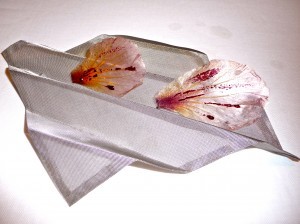
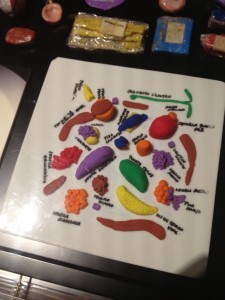
Last week I went to the opening of this new exhibition at Somerset House. It's a peculiar idea, an exhibition about a restaurant without anything to taste, and I have to admit I was sceptical. So what's in the exhibition? Well, there is a lot of memorabilia: old photographs, menus and the like. But what I found more interesting were the explorations of the creative process at El Bulli: a display of multicoloured modelling clays that were used to make maquettes for every dish, so that the proportions of each ingredient, each colour, each texture, could be reproduced accurately in the restaurant; the display of custom-made serving vessels, including strange bits of mesh, and indented glass. And there were many small video screens showing films of the construction of El Bulli dishes, which were compelling. The exhibition certainly helps to stake Ferran Adria's claim to be considered as a creative artist and not a mere cook - but it's hard to convey s sense the magic and fun of El Bulli in a museum in London...
[caption id="attachment_2550" align="alignleft" width="225" caption="Maquette for a dish"]
[/caption]
One interesting moment: I was looking at a backlit display of thumbnail photographs of every dish created at El Bulli - an impressive tapestry of images, when I got chatting to a well-known British chef who had had a few glasses of wine. 'I think it looks like an abortion!' she told me. 'Why?' I asked. She said (as closely as I can remember): 'This isn't food. It's got nothing to do with food, with the earth, with Spain, with what his grandmothers cooked. Ferran Adria has fucked it all up. Because now young people don't want to learn how to cook, they want to learn to be like him. And he may do what he does brilliantly, but few others can. He's fucked it all up.'
I have to say that I disagree with a lot of what she said. A fairly large part of Ferran Adria's oeuvre is rooted in Catalonia - for example, his spherified olives and deconstructed constructed croquettes. But even if much of his cooking was wild and inventive, it doesn't have to be an alternative to our grandmothers' cooking. It's an exploration of food and culinary culture, a game, an explosion of creativity, something marvellous and incredible - but no one in their right mind would want to eat his food every day. Real, earthy home cooking and Adria's culinary pyrotechnics can coexist in a lively food culture.
On the other hand, I've heard  from friends in Barcelona that El Bulli has had a castastrophic effect on the younger generation of chefs, as this lady argued. Everyone, they say, wants to be a gastro-magician, a celebrity, a superstar. They want to invent and play - but they no longer want to learn the basic skills of Catalan cuisine.
Last week I went to the opening of this new exhibition at Somerset House. It's a peculiar idea, an exhibition about a restaurant without anything to taste, and I have to admit I was sceptical. So what's in the exhibition? Well, there is a lot of memorabilia: old photographs, menus and the like. But what I found more interesting were the explorations of the creative process at El Bulli: a display of multicoloured modelling clays that were used to make maquettes for every dish, so that the proportions of each ingredient, each colour, each texture, could be reproduced accurately in the restaurant; the display of custom-made serving vessels, including strange bits of mesh, and indented glass. And there were many small video screens showing films of the construction of El Bulli dishes, which were compelling. The exhibition certainly helps to stake Ferran Adria's claim to be considered as a creative artist and not a mere cook - but it's hard to convey s sense the magic and fun of El Bulli in a museum in London...
[caption id="attachment_2550" align="alignleft" width="225" caption="Maquette for a dish"]
[/caption]
One interesting moment: I was looking at a backlit display of thumbnail photographs of every dish created at El Bulli - an impressive tapestry of images, when I got chatting to a well-known British chef who had had a few glasses of wine. 'I think it looks like an abortion!' she told me. 'Why?' I asked. She said (as closely as I can remember): 'This isn't food. It's got nothing to do with food, with the earth, with Spain, with what his grandmothers cooked. Ferran Adria has fucked it all up. Because now young people don't want to learn how to cook, they want to learn to be like him. And he may do what he does brilliantly, but few others can. He's fucked it all up.'
I have to say that I disagree with a lot of what she said. A fairly large part of Ferran Adria's oeuvre is rooted in Catalonia - for example, his spherified olives and deconstructed constructed croquettes. But even if much of his cooking was wild and inventive, it doesn't have to be an alternative to our grandmothers' cooking. It's an exploration of food and culinary culture, a game, an explosion of creativity, something marvellous and incredible - but no one in their right mind would want to eat his food every day. Real, earthy home cooking and Adria's culinary pyrotechnics can coexist in a lively food culture.
On the other hand, I've heard  from friends in Barcelona that El Bulli has had a castastrophic effect on the younger generation of chefs, as this lady argued. Everyone, they say, wants to be a gastro-magician, a celebrity, a superstar. They want to invent and play - but they no longer want to learn the basic skills of Catalan cuisine.
Keep reading


