•
5 Min Read
•
5 Min Read
[caption id="attachment_838" align="alignleft" width="300" caption="At the wine and food congress"]

[/caption]
I was in Singapore, for the first time, in October, as a panellist at the International Congress of Chinese Cuisine and Wine (ICCCW). I'll be writing more about the trip later, but I just wanted to mention a small but thought-provoking incident. A young Singaporean Chinese woman came up to me during one of the conference dinners and complimented me on my use of chopsticks, saying that she was unable to use them so proficiently herself. 'My parents never taught me how to eat with chopsticks,' she said, 'because they didn't feel it was important these days. Actually this is common among my generation. Now some of the local clan associations are so concerned about this that they are running classes for the younger generation in how to use chopsticks, as well as language classes in various Chinese dialects.'
[caption id="attachment_840" align="alignright" width="237" caption="Hu Yaobang"]
[/caption]
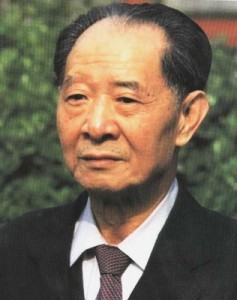
I was reminded of some famous, or infamous comments made by the open-minded General Secretary of the Chinese Communist Party, Hu Yaobang, in 1984 - he was quoted in an official magazine as saying: 'We should stop unhealthy eating practices, encourage dividing up of food, put out a few knives, forks, buy a few plates, eating Chinese food in the Western style. In this way we can avoid contagious diseases.'
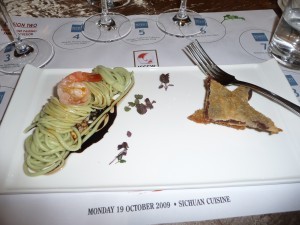
Somehow both these comments seem to me to reflect the great tragedy of China's disconnection with its traditional culture over the past two hundred years. Chopsticks, after all, are not just some trivial, peripheral cultural ornament - they have been used in China for millennia, and they are part of a grand eating tradition in which the sharing of food that has been cut into small pieces is central. Of course you can divide Chinese food into small, individual portions and eat it with knives and forks if you want (and there are historical precedents for the former - look at old images of Han Dynasty banquets, with individual set meals, for example). But is eating with chopsticks really backward and unhygienic?
For me, there is something so elegant, minimalistic and beautiful about chopsticks. They give one a more direct and tactile contact with the food, somehow. I also like their gentleness, especially when they are made of wood or bamboo - just compare them with the barbarian violence implicit in our cold metal knives! And I've never forgotten how, when I was camping with some friends in a field near Songpan in northern Sichuan, our guide simply cut and peeled twigs from nearby trees to make chopsticks for dinner!
[caption id="attachment_841" align="alignleft" width="300" caption="Is this how we should be eating Chinese food?"]
[/caption]
As to the hygiene, well, is using chopsticks in shared dishes really so dangerous? (are there any hygiene experts out reading this blog who might be able to weigh in on this debate?) Anecdotally, I have never been more frequently ill in China than at home in England, and I went on using chopsticks throughout the SARS epidemic. And I can't see that it should be any more dangerous than kissing, which Westerners do all the time in greeting and which most Chinese people seem to find rather repulsive (for hygiene reasons, too?).
And if you really want to be safe, you can use gong kuai å…¬ç·, or 'public chopsticks', as some people tried to do during the SARS crisis, and which I noticed my Hong Kong Chinese friends doing when I was there in October. There's no need to throw the baby out with the bathwater.
[caption id="attachment_838" align="alignleft" width="300" caption="At the wine and food congress"]
[/caption]
I was in Singapore, for the first time, in October, as a panellist at the International Congress of Chinese Cuisine and Wine (ICCCW). I'll be writing more about the trip later, but I just wanted to mention a small but thought-provoking incident. A young Singaporean Chinese woman came up to me during one of the conference dinners and complimented me on my use of chopsticks, saying that she was unable to use them so proficiently herself. 'My parents never taught me how to eat with chopsticks,' she said, 'because they didn't feel it was important these days. Actually this is common among my generation. Now some of the local clan associations are so concerned about this that they are running classes for the younger generation in how to use chopsticks, as well as language classes in various Chinese dialects.'
[caption id="attachment_840" align="alignright" width="237" caption="Hu Yaobang"]
[/caption]
I was reminded of some famous, or infamous comments made by the open-minded General Secretary of the Chinese Communist Party, Hu Yaobang, in 1984 - he was quoted in an official magazine as saying: 'We should stop unhealthy eating practices, encourage dividing up of food, put out a few knives, forks, buy a few plates, eating Chinese food in the Western style. In this way we can avoid contagious diseases.'
Somehow both these comments seem to me to reflect the great tragedy of China's disconnection with its traditional culture over the past two hundred years. Chopsticks, after all, are not just some trivial, peripheral cultural ornament - they have been used in China for millennia, and they are part of a grand eating tradition in which the sharing of food that has been cut into small pieces is central. Of course you can divide Chinese food into small, individual portions and eat it with knives and forks if you want (and there are historical precedents for the former - look at old images of Han Dynasty banquets, with individual set meals, for example). But is eating with chopsticks really backward and unhygienic?
For me, there is something so elegant, minimalistic and beautiful about chopsticks. They give one a more direct and tactile contact with the food, somehow. I also like their gentleness, especially when they are made of wood or bamboo - just compare them with the barbarian violence implicit in our cold metal knives! And I've never forgotten how, when I was camping with some friends in a field near Songpan in northern Sichuan, our guide simply cut and peeled twigs from nearby trees to make chopsticks for dinner!
[caption id="attachment_841" align="alignleft" width="300" caption="Is this how we should be eating Chinese food?"]
[/caption]
As to the hygiene, well, is using chopsticks in shared dishes really so dangerous? (are there any hygiene experts out reading this blog who might be able to weigh in on this debate?) Anecdotally, I have never been more frequently ill in China than at home in England, and I went on using chopsticks throughout the SARS epidemic. And I can't see that it should be any more dangerous than kissing, which Westerners do all the time in greeting and which most Chinese people seem to find rather repulsive (for hygiene reasons, too?).
And if you really want to be safe, you can use gong kuai å…¬ç·, or 'public chopsticks', as some people tried to do during the SARS crisis, and which I noticed my Hong Kong Chinese friends doing when I was there in October. There's no need to throw the baby out with the bathwater.
Keep reading


